Start here
Back pain often begins with a strained muscle or a worn disc or joint
A pulled muscle is a common cause of back pain, and back pain often improves on its own within a few weeks [1]. Less often, a disc, a joint, a nerve or another condition is involved [2][3].
Key points
- Back pain usually improves within a few weeks, but it can last longer or keep coming back [1].
- Common causes include muscle and ligament strain, disc injury, and wear in the joints of the spine [2][3].
- Doctors group back pain by how long it lasts: acute, subacute or chronic [3].
- Sometimes no specific cause can be found, even when the pain is long-lasting [3][4].
- Bladder or bowel changes or numbness in both legs with back pain need emergency care, and feeling hot or shivery needs prompt medical attention [1].
Muscle and ligament strain explains many cases of low back pain
Muscle soreness from activity is one of the more common causes of low back pain [2]. Muscles and ligament fibers can be overstretched or injured [2]. Ligaments are the short, tough bands that hold the bones of the spine in place [3].
Strain often follows an activity your body is not used to [2]. Examples include the first softball or golf game of the season, or too much yard work or snow shoveling in one day [2]. The stiffness and soreness usually go away within a few days [2].
- A ligament injury can happen when you twist or lift improperly [3].
- Myofascial pain is tightness and pain in the muscles that support the spine. It can follow muscle damage or come from nerve input to the muscles from the spine [3].
- Back pain can also begin after an accident, a fall or lifting something heavy [3].
Intervertebral discs can wear down or herniate and press on nerves
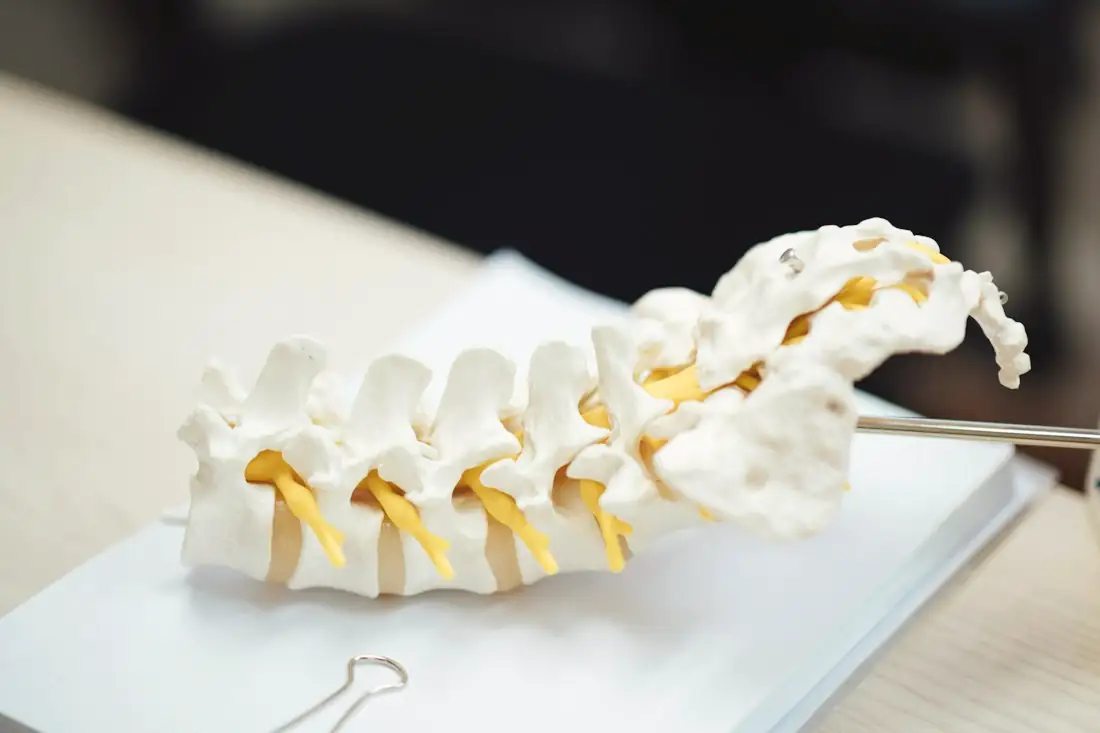
Discs are cushion-like pads between the vertebrae, the small bones stacked to form the spine. They act as shock absorbers and spacers [3].
With age, discs begin to wear away and shrink [2]. Small tears can form in the tough outer part of a disc [2]. Some people with tears have no pain at all, while others have pain that lasts weeks, months or longer, and it is not clear why [2].
A disc herniates when its jelly-like center pushes through its outer layer. If the bulge presses on the sensitive spinal nerves, it causes pain [2]. A herniated disc may occur after lifting, pulling, bending or twisting [2].
Smoking and discs
Smoking has been found to speed up the breakdown of discs [2].
Osteoarthritis of the spine can narrow the space around the nerves
As discs collapse, the small facet joints on the back of the spine can rub against each other. This causes pain and stiffness, and the wear on these joints is called osteoarthritis [2].
- Bone spurs and thickened ligaments can narrow the spinal canal. This is called spinal stenosis, and it puts pressure on the spinal cord and nerves [2][3].
- Spondylolisthesis means one vertebra slips forward on another. If it slips too far, the bones may press on the spinal nerves [2][3].
- An abnormal curve of the spine can develop in teenagers or in older people with arthritis. It may cause back pain and sometimes leg pain, weakness or numbness [2].
- Osteoporosis weakens bones with age. In people who have it, minor trauma such as a ground-level fall can break a vertebra and cause back pain [2].
Sciatica sends pain from the back into the buttock and leg
Nerve irritation can show up as pain away from the back. Pain can spread into the buttocks, legs, hip or abdomen [3]. A herniated disc in the low back often presses on the nerve root that leads to the leg and foot, so pain often runs through the buttock and down the leg [2].
- Sciatica is pain in the buttock and leg, sometimes with numbness, tingling or weakness down to the foot [2].
- Sciatica is commonly linked to a herniated disc. It is also possible to have it without back pain [2].
- Pain that reaches the buttock or outer hip but not down the leg is a different pattern [2].
- Numbness or weakness in the legs or feet can come with back pain [3].
- Some people notice morning stiffness that eases with activity [3].
Doctors classify back pain by how long it lasts
| Type | How it behaves |
|---|---|
| Acute | Starts suddenly and usually lasts a few days to a few weeks [3] |
| Subacute | Can start suddenly or over time and lasts 4 to 12 weeks [3] |
| Chronic | Can start quickly or slowly, lasts longer than 12 weeks and occurs daily [3] |
Sometimes a specific cause cannot be identified [3]. This is common in long-lasting low back pain, where many cases have no identifiable biological cause [4]. Several factors can also be present at once and interact [3].
A large genetic study of chronic low back pain suggested a possible role for nerve, cartilage and inflammation mechanisms. Its authors suggest that different groups of patients may need different treatment [4].
Who is more likely to have back pain
Risk is higher with weak back and stomach muscles, overdoing exercise after being inactive, excess weight, heavy physical jobs or long desk hours with poor posture, poor sleep, depression or anxiety, and age past 45 [3].
Spinal infection and gout in the spine can also cause back pain
Very rarely, back pain signals a serious problem such as a broken bone, cancer or an infection [1]. Other conditions can also be behind it [3].
- Inflammatory arthritis of the spine and fibromyalgia, a condition of widespread muscle pain and fatigue [3].
- Endometriosis, which is uterine tissue growing outside the uterus [3].
- Infections of the spine bones or the discs between them, and, in rare cases, tumors on the spine or elsewhere in the back [3].
- Gout in the spine, which a case report describes as mimicking inflammatory, infectious or mechanical spinal problems. A normal blood urate level does not rule it out [5].
- Low-grade bacterial infection inside a disc, which some researchers suggest may cause pain. It remains a hypothesis [6].
If you have vascular or arterial disease, a history of cancer, or pain that is always present regardless of activity or position, you should talk to your primary care doctor [2].
When to get care
Back pain with numbness or bladder changes needs emergency care
These signs with back pain need emergency care [1]:
- You have pain, tingling, weakness or numbness in both legs [1].
- You have a loss of feeling around the genitals or anus [1].
- Your bladder or bowel habits change, such as trouble urinating or losing control of urine or stool [1].
- Sexual function changes, such as being unable to get or keep an erection or to orgasm [1].
- The pain started after a serious accident, such as a car crash [1].
Do not drive yourself to the emergency room. Ask someone to drive you or ask for an ambulance [1].
These signs need prompt medical attention [1]:
- You feel hot, cold, shivery or generally unwell [1].
- The pain is severe and starts suddenly, or it is getting worse quickly [1].
Chills with back pain, or unexpected weight loss, are also reasons to call your doctor [2]. Other reasons to book a visit include pain that has not improved after a few weeks, pain that is worse at night, a lump or swelling in the back, or pain that comes from between the shoulders rather than the low back [1].
If you think you may have a medical emergency in the United States, call 911 or go to the nearest emergency room.
Sources
- Back pain nhs.uk
- Low Back Pain orthoinfo.org
- Back Pain Symptoms, Types, & Causes niams.nih.gov
- Insights Into Chronic Low Back Pain Etiology: Population-Based Genome-Wide Association Study Identifies 18 Risk Loci Spine
- Axial gout diagnosed by dual-energy CT in a young normouricaemic man with recurrent nephrolithiasis: a case-based review Rheumatology international
- Do bacteria play an important role in the pathogenesis of low back pain? ANZ journal of surgery
Not medical advice. This page is general education written from the sources above. It cannot diagnose a condition or replace a licensed clinician who knows your history. If you may be having an emergency, call your local emergency number or go to the nearest emergency department.