Start here
Back pain treatments start with conservative care before injections or surgery
Most back pain improves within a few weeks [1]. Treatment should generally begin with conservative methods such as oral medications, physical therapy and exercise [2].
Key points
- Back pain often improves within a few weeks, and staying active is advised over long periods in bed [1].
- Exercise, massage, cognitive behavioral therapy and manual therapy are the first treatments clinical guidelines recommend [3].
- Pain medicines can help but carry long-term risks, and the benefit of NSAIDs over placebo was small in the best-designed studies [3].
- Injections are second-line options, surgery is mandatory for nerve problems such as progressive foot droop, and some warning signs need emergency care or prompt medical attention instead of home treatment [1][2].
Most low back pain improves within a few weeks with self-care
Back pain usually improves within a few weeks, though it can last longer or keep coming back [1]. There are things you can do to help recovery along [1].
- Stay active and keep up your daily activities [1].
- Avoid staying in bed for long periods [1].
- Use an ice pack wrapped in a cloth to reduce pain and swelling [1].
- Use a heat pack wrapped in a cloth to ease joint stiffness or muscle spasms [1].
- Try walking, swimming, yoga or pilates, which may help ease back pain [1].
- Ask a pharmacist if you are unsure which painkiller is suitable for you [1].
Make an appointment with your primary care doctor if any of these apply [1][4]:
- The pain has not improved after a few weeks of home treatment [1][5].
- It stops you from doing your day-to-day activities [1].
- It is worse at night, or does not improve with rest [1].
- It is worse when you sneeze or cough [1].
- You have a lump or swelling in your back, or its shape has changed [1].
- The pain is in the upper back, between your shoulders [1].
- Severe pain does not improve with medication [4].
When to get care
Back pain with leg numbness or bladder changes needs emergency care
Very rarely, back pain is a sign of a serious problem such as a broken bone, cancer or an infection [1]. These signs need emergency care rather than waiting for home treatment to work [1]:
- Pain, tingling, weakness or numbness in both legs [1].
- Loss of feeling around the genitals or anus [1].
- Bladder or bowel changes, such as trouble urinating or losing control of urine or stool [1].
- Changes in sexual function, such as trouble getting or keeping an erection or reaching orgasm [1].
- Back pain that started after a serious accident, such as a car crash [1].
Getting there
If you have the emergency signs, do not drive yourself to the emergency room. Ask someone to drive you or call for an ambulance [1].
These signs need prompt medical attention [1]:
- Severe pain that starts suddenly or is getting worse quickly [1].
- Feeling hot, cold, shivery or generally unwell [1].
Fever, chills or unexpected weight loss with back pain are reasons to call your doctor [5].
If you think you may have a medical emergency in the United States, call 911 or go to the nearest emergency room.
Exercise and manual therapy are early options for pain that lingers
Clinical guidelines recommend conservative treatment first, with a focus on approaches that do not rely on drugs. These include exercise, massage, cognitive behavioral therapy and manual therapies [3]. Managing low mood, depression or anxiety is recommended alongside these treatments [3].
Specific exercises and stretches can help back pain, but stop if your pain gets worse and get advice from a doctor [1].
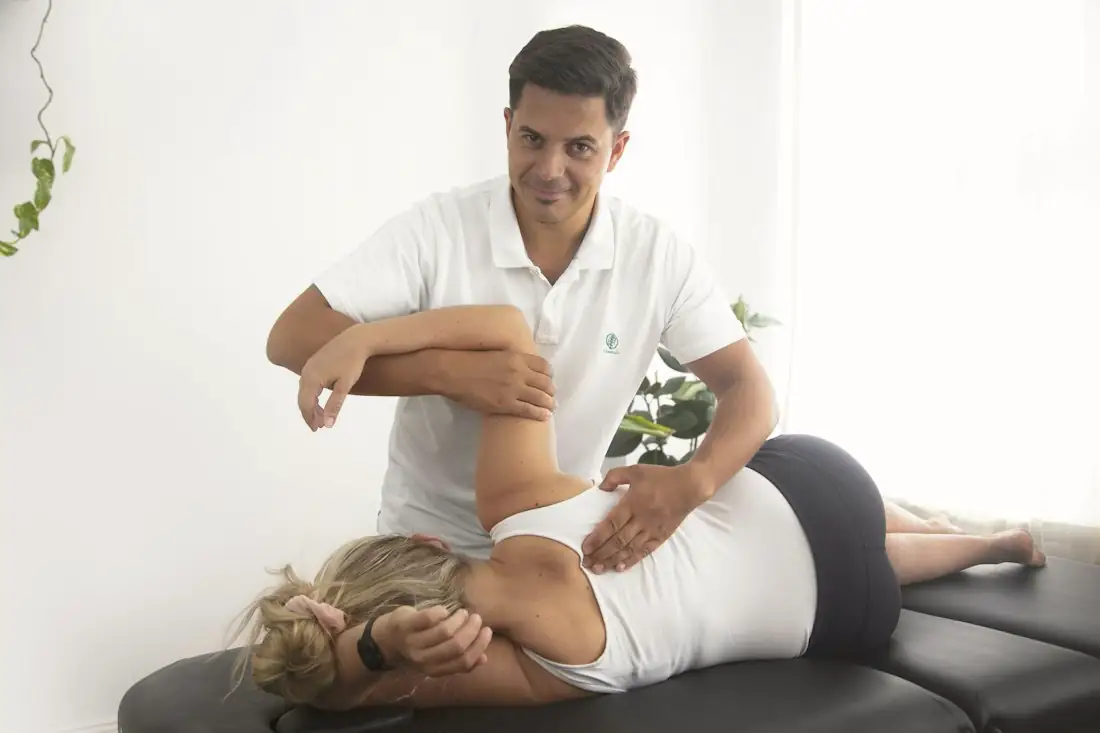
If pain does not get better after a few weeks, manual therapy may be recommended [1]. In manual therapy, a trained therapist massages and moves the muscles, bones and joints in your back [1].
Pain medicines can help back pain but carry long-term risks
If your back pain is severe or not getting better, you may be prescribed painkillers [1]. Reviews support using anti-inflammatory drugs called NSAIDs and opioids for long-lasting low back pain [3]. Both have risks with long-term use [3].
- Opioids can lead to dependence [3].
- NSAIDs can cause kidney problems [3].
- In studies with a low risk of bias, NSAIDs beat a placebo only by a small amount [3].
Some painkillers may not be suitable for everyone, so check with a pharmacist or doctor if you are unsure [1].
Nerve procedures and ozone injections come after conservative care
Minimally invasive injections and similar procedures are described as second-line treatments, used when conservative approaches have failed [2].
One option for long-term lower back pain is a procedure that seals off some nerves in the back so they stop sending pain signals [1].
Another is the oxygen-ozone injection. It puts a gas mixture into the muscles beside the spine, the discs, the facet joints or the openings where nerves exit the spine [2]. A review of studies found that injections guided by imaging did better than injections placed by anatomical landmarks alone [2]. The same review says there is no agreement on the best procedure for effectiveness, complication risk or how long results last [2].
Surgery is an option for a slipped disc and mandatory for some nerve problems
If a medical condition such as a slipped disc causes your back pain and other treatments have not helped, surgery may be an option [1].
One review describes surgery as mandatory when there is a nerve problem such as progressive foot droop (a foot that weakens over time) or paralyzing sciatica [2]. Sciatica is pain that runs down the buttock and leg along the sciatic nerve [2].
Clinical guidelines favor conservative care and reviews point to communication
| Option | What the evidence says |
|---|---|
| Self-care and staying active | Back pain often improves within a few weeks [1] |
| Exercise, massage, CBT, manual therapy | Recommended first by clinical guidelines [3] |
| NSAIDs and opioids | Supported by reviews, with long-term risks and small NSAID effects in the best studies [3] |
| Oxygen-ozone injections | Second-line; imaging guidance did better; no agreed best method [2] |
| Surgery | An option after other treatments fail for a condition like a slipped disc; mandatory for some nerve problems [1][2] |
For long-lasting low back pain, current treatments only provide moderate relief [3]. A review of 21 studies looked at the setting around care. Eight reported less pain and seven reported better physical function when these factors were deliberately changed [3]. The factors included addressing unhelpful beliefs about illness, suggestions that shape what you expect from treatment, and positive communication such as empathy [3]. The authors say these findings need careful interpretation [3].
A separate review found that training built on a model that considers body, mind and social factors together may shift student therapists' attitudes and beliefs about back pain treatment [6]. It called for more research on what that means for patients [6].
Sources
- Back pain nhs.uk
- Metanalysis on the effectiveness of low back pain treatment with oxygen-ozone mixture: Comparison between image-guided and non-image-guided injection techniques European journal of radiology open
- Impact of contextual factors on patient outcomes following conservative low back pain treatment: systematic review Chiropractic & manual therapies
- Back Pain Symptoms, Types, & Causes niams.nih.gov
- Low Back Pain orthoinfo.org
- Educational interventions on attitudes and beliefs about low back pain treatment in physical therapy students and physical therapists: a systematic review and meta-analysis Disability and rehabilitation
Not medical advice. This page is general education written from the sources above. It cannot diagnose a condition or replace a licensed clinician who knows your history. If you may be having an emergency, call your local emergency number or go to the nearest emergency department.