Urgent warning signs
Spinal infections can damage bone and nerves and need prompt medical assessment
Spinal infections are uncommon but serious, and delayed treatment is associated with death, whole-body complications and nerve damage [1][2]. Early assessment, and treatment guided by test results, matter [2].
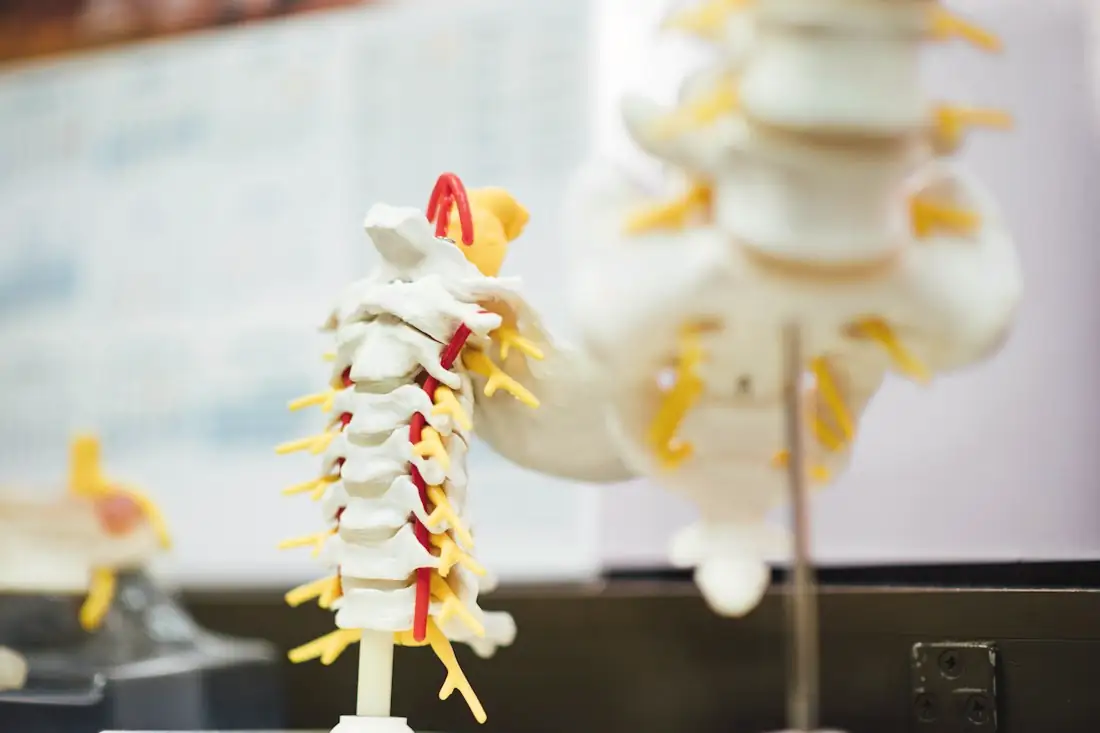
Key points
- Spinal infections are relatively uncommon, but they can lead to sepsis, abscess formation and neurological impairment [2].
- Pain, swelling, redness and warmth over bone, or a very high temperature with feeling unwell, call for prompt medical attention [3].
- Diagnosis often relies on imaging, blood markers and a biopsy of the disc space or vertebral endplate [4][2].
- Usual treatment is antibiotics with bed rest and bracing, and surgery is considered when the infection is complicated [2].
- Other conditions, such as SAPHO syndrome, can look like spinal infection on scans [5].
Spinal infections affect the vertebrae and the discs between them
Spinal infection covers a spectrum of conditions. These include pyogenic spondylodiscitis, vertebral osteomyelitis, spinal epidural abscess, paraspinal and psoas abscesses, and infection after spine surgery [1].
- Spondylodiscitis is the most common type. It mainly affects elderly people with weakened immune systems [2].
- Vertebral osteomyelitis is infection of the spinal bone. It may occur alone or together with an epidural abscess [2].
- Surgical site infection can follow spine surgery. It can be hard to clear when implants are present, because removing implants may destabilize the spine [1].
These infections are relatively uncommon. One review puts them at 2 to 7% of musculoskeletal infections [2]. Staphylococcus aureus is the most common bacterium and is responsible for up to 80% of cases [2]. Population-based studies report rising rates of spondylodiscitis and vertebral osteomyelitis [1].
When to get care
Spinal infection needs prompt medical attention when fever or bone symptoms appear
Delayed treatment is associated with death, whole-body complications and neurological deficits [1]. The most serious complications of spinal infection include sepsis, epidural and subdural abscesses, meningitis, spinal instability and neurological impairment [2].
- Pain, swelling, redness and a warm sensation over an area of bone [3].
- A very high temperature, or feeling hot, cold or shivery, together with feeling generally unwell [3].
- Symptoms that return after a previous bone infection [3].
- A young child who does not want to use an arm or leg and seems irritable. Young children do not always have a high temperature [3].
If any of these signs appear, get prompt medical attention [3].
Why speed matters
Guidance on bone infection in general says that treatment started within 3 to 5 days of the infection beginning often clears it up completely. If it is not treated quickly, it can cause infections and permanent bone damage [3].
If you think you may have a medical emergency in the United States, call 911 or go to the nearest emergency room.
Osteomyelitis causes severe pain and can bring warmth and redness over the bone
Osteomyelitis usually causes severe pain. The legs are most often affected, but other parts of the body can be involved [3].
- A feeling of warmth over the affected area [3].
- Redness of the skin, which may be harder to see on black or brown skin [3].
- A high temperature and a general feeling of being unwell [3].
Several spine infection presentations are hard to diagnose at first, so symptoms alone cannot settle the question. A licensed clinician needs to assess them [4].
Diabetes and a weakened immune system raise the risk of bone infection
Anyone can develop osteomyelitis, but some groups are at higher risk [3].
- People with poorly controlled diabetes can lose feeling in the feet. Small cuts may go unnoticed and become an infection that spreads to bone [3].
- People with a weakened immune system, for example during chemotherapy or with HIV [3].
- Children, especially after a respiratory infection or chickenpox [3].
- Older or frail people and those with other illnesses. These factors were linked to higher death rates in spinal infection whatever the treatment [2].
Imaging and biopsy of the disc space help clinicians confirm a spinal infection
Spondylodiscitis centered on a single disc level is easily diagnosed. Other presentations can be difficult to recognize at first [4]. The steps below describe how diagnosis typically proceeds.
- A clinician examines the area and may order blood tests [3].
- Scans are used to look for infection. If infection is suspected but cannot be clearly established, short-term follow-up cross-sectional imaging is the key lesson from one imaging review [4].
- A sample may be taken from the disc space or vertebral endplate by image-guided or surgical aspiration or biopsy. It is tested for germs and examined as tissue [2].
- Final treatment is guided by culture results and antibiotic susceptibility testing [2].
- Response is followed with clinical review and blood markers such as C-reactive protein and erythrocyte sedimentation rate [2].
Antibiotics form the main treatment for spinal infection and surgery is sometimes added
The usual approach is antibiotics, bed rest and bracing. Surgery is considered when the infection is complicated by intractable spinal pain, neurological impairment or abscess formation [2].
| Approach | What the sources report |
|---|---|
| Antibiotics | For bone infection, courses usually last 4 to 6 weeks and up to 12 weeks if severe. The course should be finished even after feeling better [3]. |
| Bed rest and bracing | Part of usual conservative care. It succeeds in around 80 to 90% of well-selected early cases without neurological deficits [2]. |
| Surgery | Considered after poor response, vertebral collapse or deformity, or neurological deficit [2]. Damaged bone may be removed and an abscess may need draining [3]. |
| Local antibiotic perfusion | Used alongside other treatment in small uncontrolled reports. Its independent effectiveness and safety are not yet known [1]. |
| Implanted antimicrobial bone material | One small series of 19 patients found it safe. Its effect on clearing infection needs more study [6]. |
A meta-analysis found it inconclusive whether surgical or conservative treatment is better for death rates, recurrence or time in hospital [2]. Surgeons often try to keep spinal implants in place, because removing them can leave the spine unstable [1].
Talk to a clinician
The best choice depends on age, other illnesses, patient selection and local practice. A licensed clinician who knows the person's situation should guide it [2].
SAPHO syndrome can mimic a spinal infection on imaging
SAPHO syndrome is a rare inflammatory disease that can affect the spine. Scans may show both bone destruction and bone growth, which is easily confused with infectious spondylitis [5].
One case report describes a patient with a month of low back pain, recurrent fever and night pain. Four weeks of antibiotics brought no improvement. Pustules on the hands and feet, specialist review, scans and a bone biopsy pointed to SAPHO syndrome instead [5].
Its treatment differs from that of infection. It relies mainly on anti-inflammatory and immune-modulating approaches rather than antibiotics [5]. Careful history, imaging and input from several specialists help avoid unnecessary antibiotics and surgery [5].
Sources
- Continuous local antibiotic perfusion for spinal infection: a systematic review of reported cases Journal of spine surgery (Hong Kong)
- Is Conservative Treatment Superior to Surgical Intervention in Hematogenous Primary Septic Spinal Infection in Terms of Mortality, Recurrence, and Hospital Stay? A Systematic Review and Meta-Analysis Journal of clinical medicine
- Osteomyelitis nhs.uk
- Pitfalls in Imaging of Spinal Infection Seminars in musculoskeletal radiology
- Misdiagnosed with spinal infection instead of SAPHO syndrome: a case report and literature review Frontiers in immunology
- Experience with Bioactive Glass S53P4 (BAG-S53P4) Granule Implantation During the Surgical Management of Spinal Infection: Single-center Case Series of 19 Patients and Brief Review of Literature World neurosurgery
Not medical advice. This page is general education written from the sources above. It cannot diagnose a condition or replace a licensed clinician who knows your history. If you may be having an emergency, call your local emergency number or go to the nearest emergency department.